
I arrived at Terroir Tribeca one evening in early March at the invitation of leading New York City-based wine and spirits marketing agency Colangelo & Partners to learn about the “bollicine” or bubbles of the Alta Langa in the world-renowned Northwestern Italian wine territory of Piedmont. I was curious about the traditional method spumante riserva from this small (less than 600 hectares) DOCG situated in the hills of a region otherwise known for age-worthy, full-bodied, and complex red wines including Barolo, Barbaresco, and Barbera.
I have been singing the praises of traditional method Italian spumante like Franciacorta and Oltrepò Pavese from Lombardy, and Trentodoc from Trentino, for years. The best examples are typically crisp and elegant, with a fine and persistent mousse, and a perfectly balanced floral, fruit, nut, and toast flavor profile. When I learned that Alta Langa was the first Italian region to produce traditional method spumante I had to give it a try.
I had just picked up a glass, and was standing in front of a communal table laden with some of Terroir Tribeca’s tasty bites including black rice arancini, croquettes, and grilled shrimp and chicken skewers, when someone across the table asked, “Have you tried my friend’s wine?”
“Not yet.” I responded. In fact, I hadn’t yet had an opportunity to try any of the wines.
“Well you should, because it’s good. I should know. I’m from Alta Langa, and he makes one of the best I’ve ever had.”
I figured if this winemaker has the kind of friends who will come here to pitch for him, then either his spumante is as good as this man said, or he’s a really nice guy. Either way, how could I refuse?
“Sure.” I said. After all, I was there to try the spumante of Alta Langa.
“I’m Dino by the way.” We shook hands across the table.
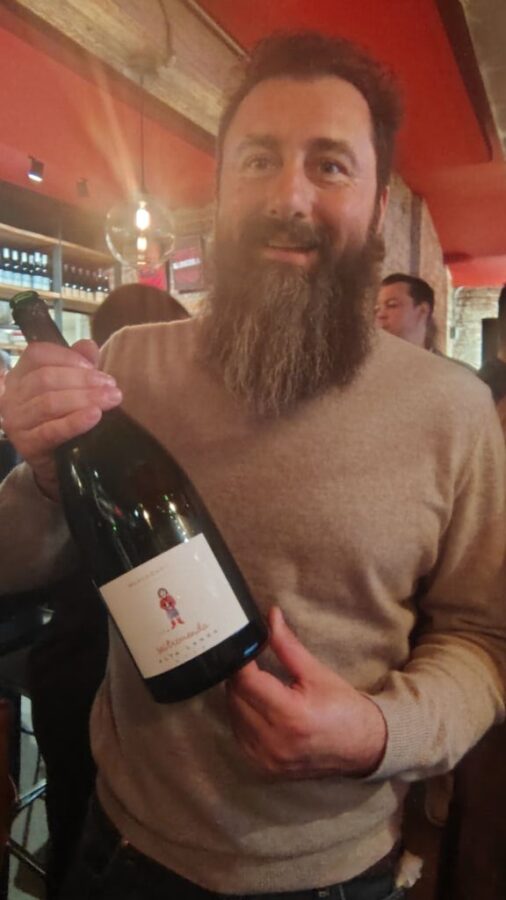
“That’s Marco, from Marco Capra. He’ll pour for you.” he gestured toward a man standing on my left.
A bearded man with a sturdy build and a broad smile on his face eagerly extended a large format bottle toward the empty wine glass in my hand. I regarded the label. It was good to know what I was drinking. There was a colorful drawing of a little red-haired girl in a blue pleated skirt, and red sweater and rainboots, holding an armful of yellow and blue balls on it. Underneath was the Italian word “Seitremenda.”
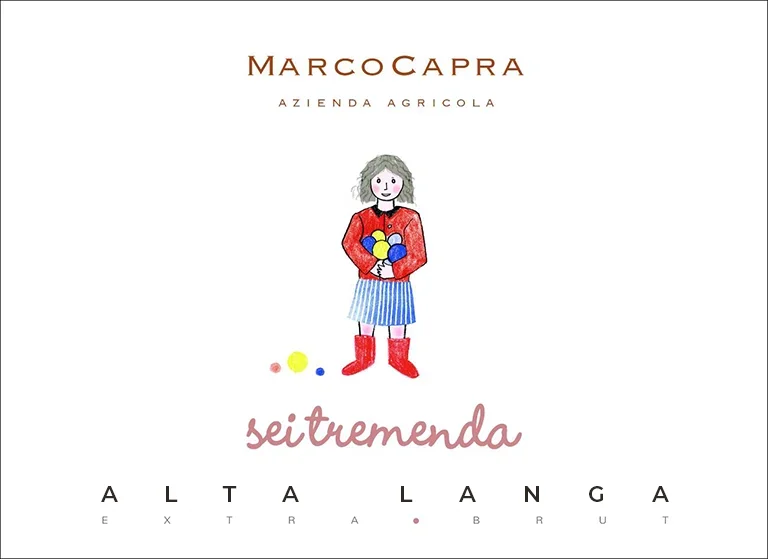
“I love the label.” I said half to myself.
I pointed to the figure. “Who is that?”
He paused for a moment as if contemplating my words, then replied, “Mia figlia.” He beamed with pride.
I am by no means fluent in Italian but I understood enough to know that he had said, “My daughter.”
“Marco’s English isn’t very good. She’ll translate for you.” Dino interjected. He gestured toward a young woman to my right.
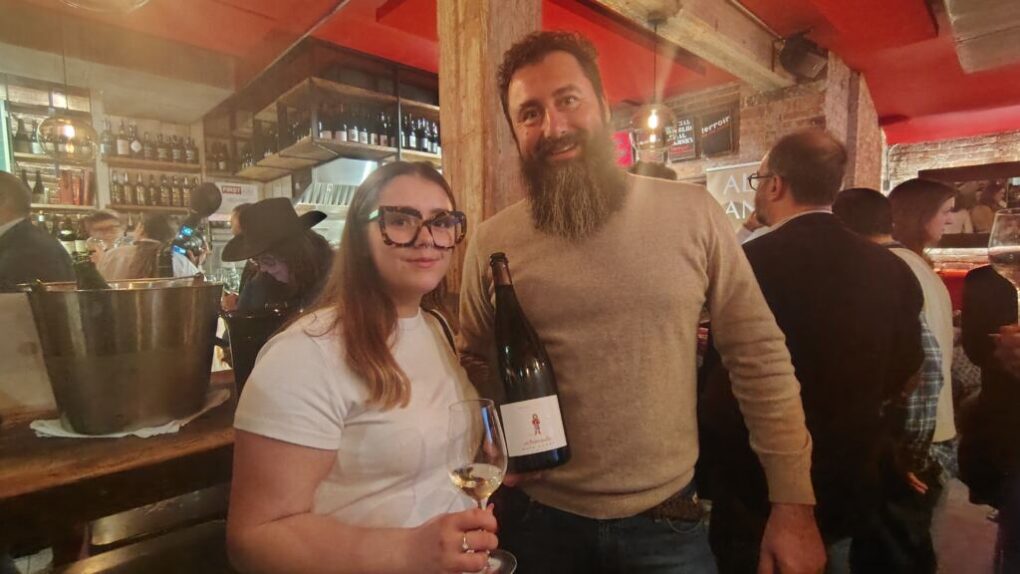
Through Ketti, the warm and ebullient sales manager and interpreter at Marco Capra who spoke four languages fluently, and understood wine well beyond her 21 years, I learned the story behind the label.
Marco was inspired to make a wine in honor of his daughter Elisabetta, who was born in 2011. He felt spumante was a natural choice because it celebrated her youthful ebullience, playfulness, and vibrancy. The name of the wine “Seitremenda” means “You are tremendous/full of life.” The name is also significant because “tre” and “sei,” are “three” and “six” in Italian, and the Seitremenda ages on its lees for 36 months before disgorgement.
Illustrator Alice Lotti presented six drawings that captured Elisabetta at play (on a swing or a slide, riding a tricycle or a hobby horse, or playing with marbles or a stuffed bear) from which Marco was to choose his favorite for the label.
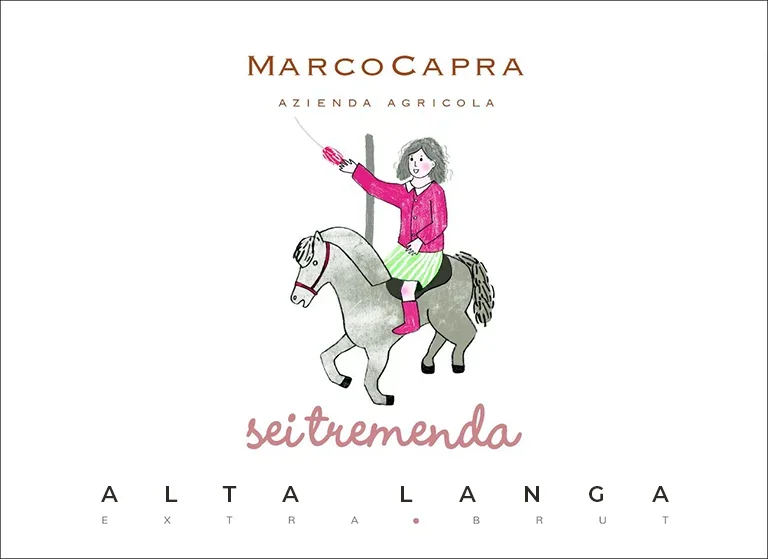
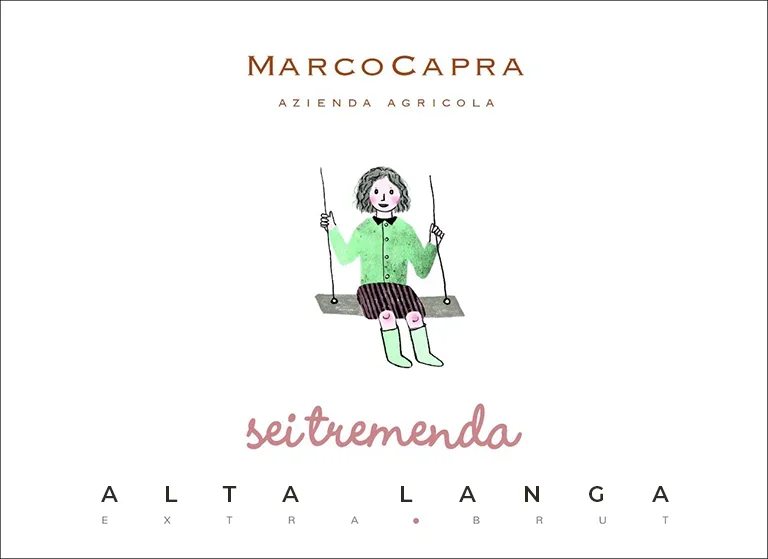
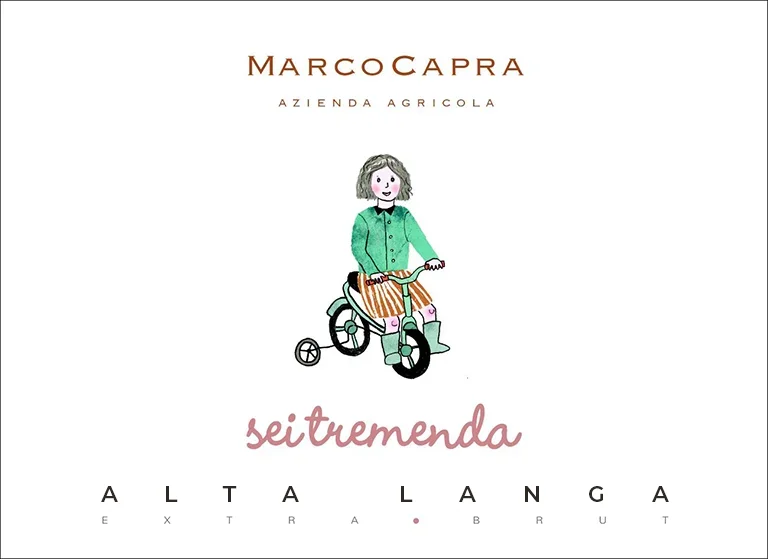
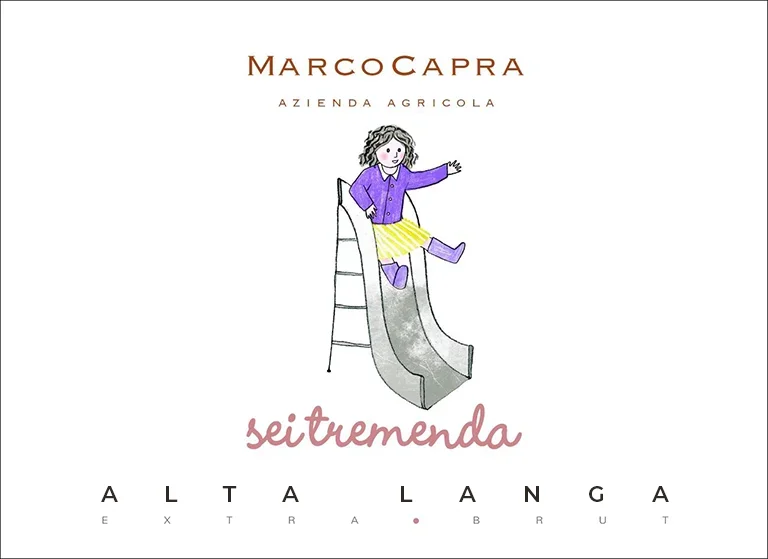
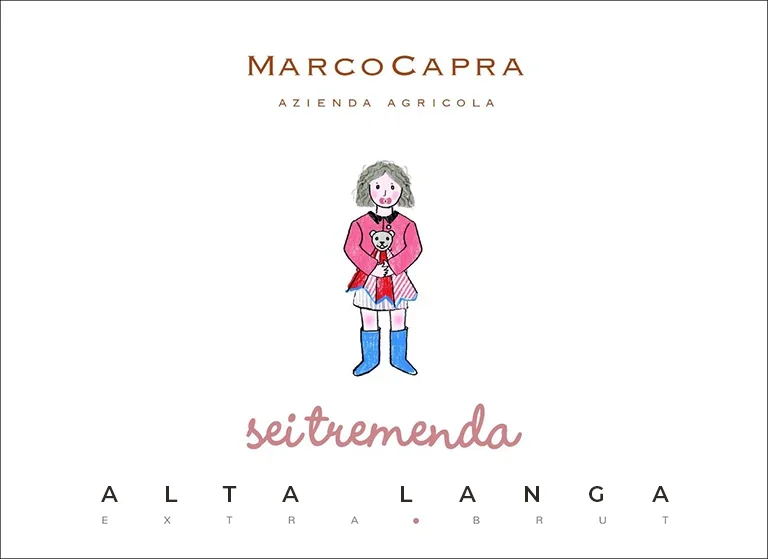
But he liked all of them so every case contains two bottles of each label and a spumante-themed board game created by Cristina Ciamporcero that Marco credits with having sparked Elisabetta’s interest in wine.
Technical details:
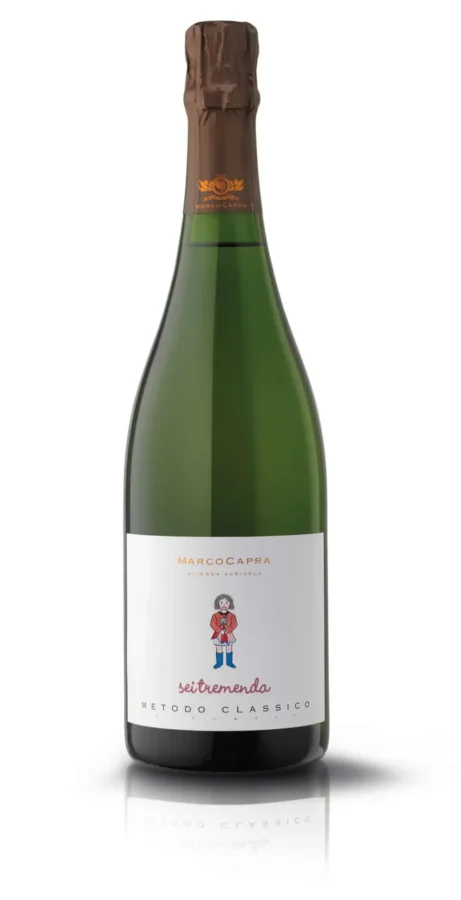
Marco Capra Seitremenda Metodo Classico, Extra Brut
Composition: Produced from Chardonnay and Pinot Noir grown on limestone and sandy soil situated at 400 meters above sea level
Production: Manual harvesting between the end of August and the beginning of September. The wine is aged on the lees for 36+ months with a second fermentation taking place in the bottle.
Residual Sugar: (0-6 g/L)
Flavor profile: Soft and persistent mousse, with a refreshing sapidity and acidity, delicate white flower and orchard fruit aromas, and multi-layered ripe green apple, peach, apricot, and mineral notes
It paired very well with black rice arancini, grilled shrimp, and creamy potato croquettes.
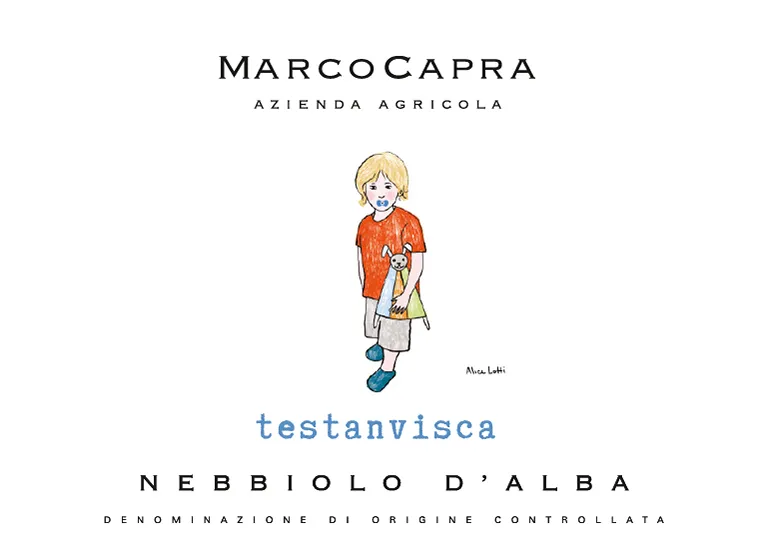
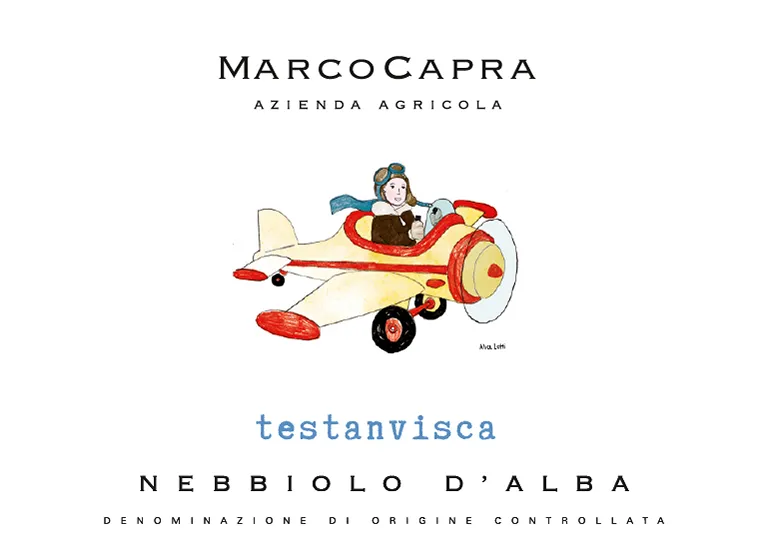
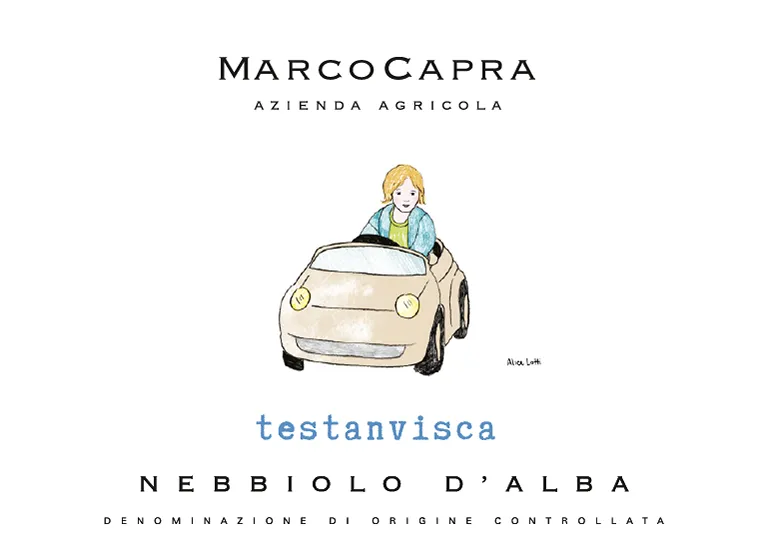
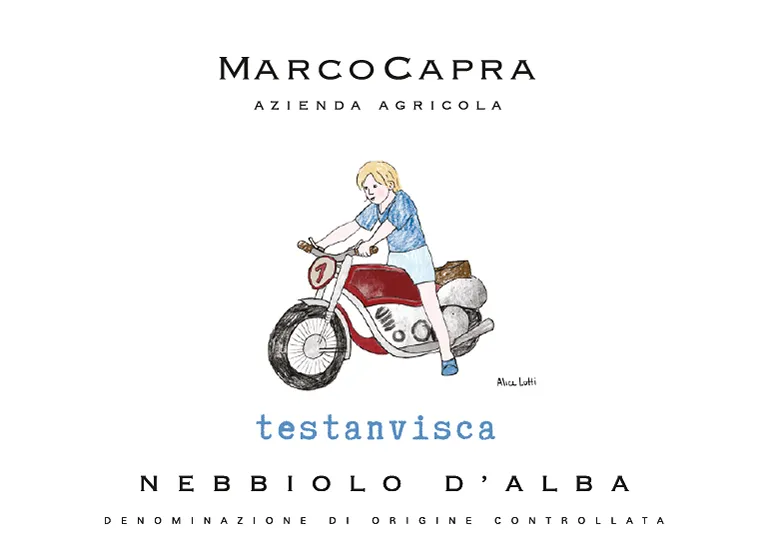
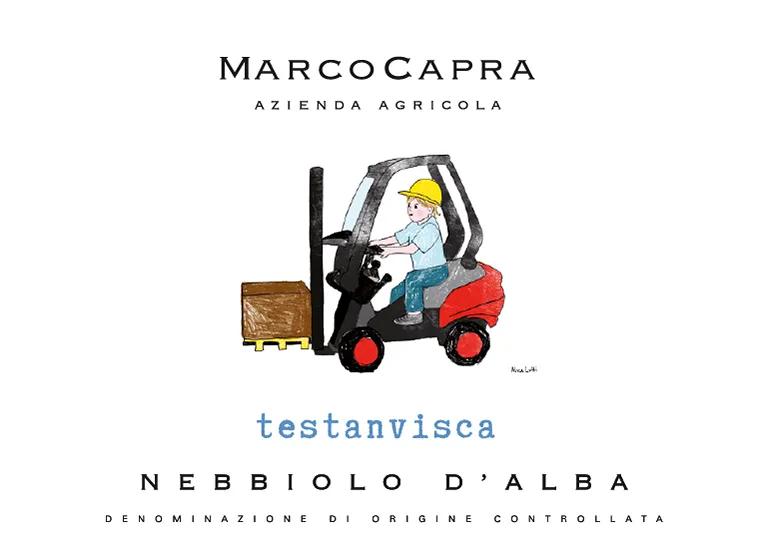
Marco also made a wine to celebrate the birth of his son Riccardo, in 2012. It’s the Marco Capra “Testanvisca” Nebbiolo d’Alba DOC, and I had the opportunity to try it a few days after the event. “Testanvisca” is a Piedmontese term meaning quick-witted and hot-tempered. Marco felt the name was appropriate given Riccardo’s spirited and capricious nature. Marco joked that he had to make a wine for Riccardo too, or the two children “might fight.” Nebbiolo is the flagship grape of Piedmont, and this vivacious red wine reflects the best of the Piedmont terroir.
Alice Lotti also created six labels (Riccardo in an airplane, a tractor, a car, a motorcycle, operating a forklift, and playing with plush bear) for this wine, and a Nebbiolo-themed board game (also by Cristina Ciamporcero), is included in every case.
Technical Details:
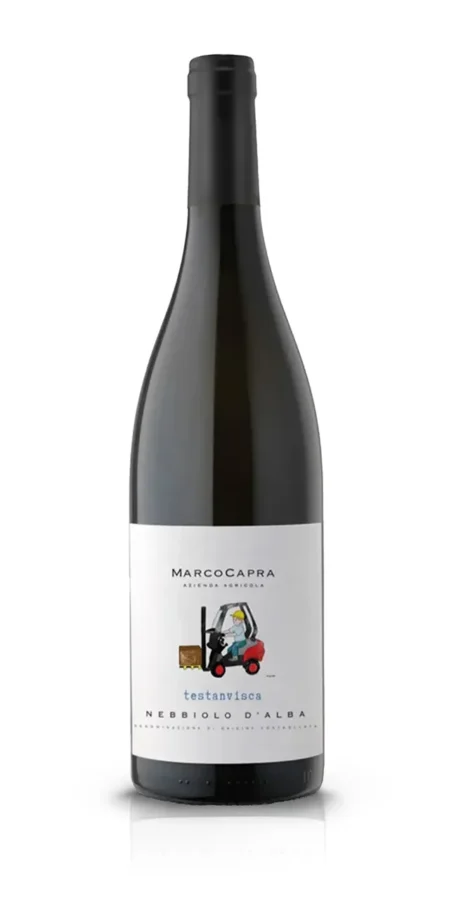
Marco Capra “Testanvisca” Nebbiolo d’Alba DOC
Composition: Made from Nebbiolo grown on clayey-limestone and sandy soil situated at 330 meters above sea level
Production: Manual harvesting in late October. Stainless steel and malolactic fermentation, followed by 12-15 months aging in Austrian oak casks
Flavor profile: Elegant and complex, with a fresh acidity and soft tannins, tantalizing aromas of purple flowers and dark berry fruit, and raspberry, blueberry, black currant, licorice, and black spice notes
The perfect balance of berry fruit and spice in this vibrant wine paired beautifully with roasted duck and root vegetables, braised beef, stir-fried pork, and soft cheeses.
The two wines could not have been more different in terms of their grape composition and method of production. Nevertheless, both wines have a freshness and purity of grape and terroir expression that reflect Marco’s dedicated approach to winemaking. From vine and grape, to label and bottle, one thing is clear—Marco makes wine from the heart and it’s apparent in every sip.

Be First to Comment