
On November 11, 2025, more than 30 producers from some of Hungary’s top winemaking territories gathered together during the Wines of Hungary event at the Wythe Hotel in Williamsburg, Brooklyn to present some of their finest “bor” (Hungarian word for wine) to members of the wine press and trade. The event, organized by Constance Chamberlain of Wine & Co., gave attendees a rare opportunity to taste the breadth of Hungary’s unique and expressive wines, including the crisp and fruit-centered, the fresh, saline, and mineral-driven, and the rich, full-bodied, and complex.

The wine-producing territory of Hungary, consisting of 22 wine regions and spanning 59,000 hectares, has a millennia-long tradition of winemaking. The varied landscape, marked by mountains, valleys, coasts, and lakes that offer a range of soil types from marine to volcanic, create the ideal backdrop for growing both indigenous and regional grapes like Furmint, Kadarka, Bikavér, Kékfrankos (Blaufränkisch), and Hárslevelű, and international varietals such as Sauvignon Blanc, Chardonnay, Pinot Noir, and Cabernet Franc.
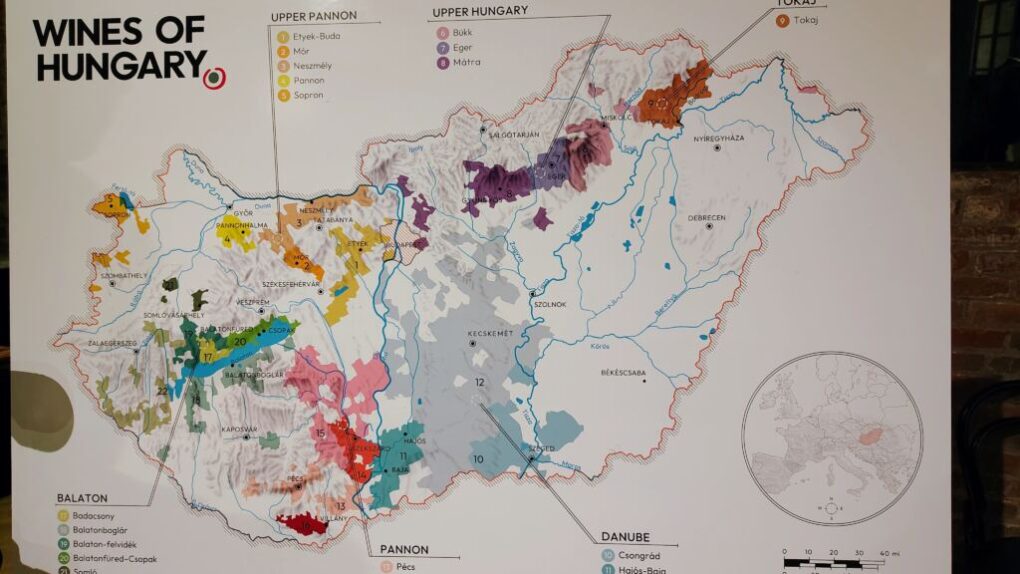
The predominantly cool climate favors white grape cultivation, and white wines account for around 70% of wines produced in Hungary.
Hungary is probably most renowned for Tokaji Aszú, a sweet wine made from grapes that have been affected by the botrytis fungus, a process referred to as “noble rot.” Botrytised grapes become dehydrated, resulting in a higher concentration of sugar. Wines made from these grapes are rich and silky, with beautiful floral and fruit aromas, and honey, nut, herbal, and candied citrus, orchard, and tropical fruit flavors.
However, Hungarian wine production is not limited to sweet wines. Hungarian winemaking also encompasses sparkling, and dry white, rose’, and red wines, Hungary’s different wine territories offer a variety of wines that reflect the unique characteristics of the terroir.
Some of Hungary’s principal wine regions include:
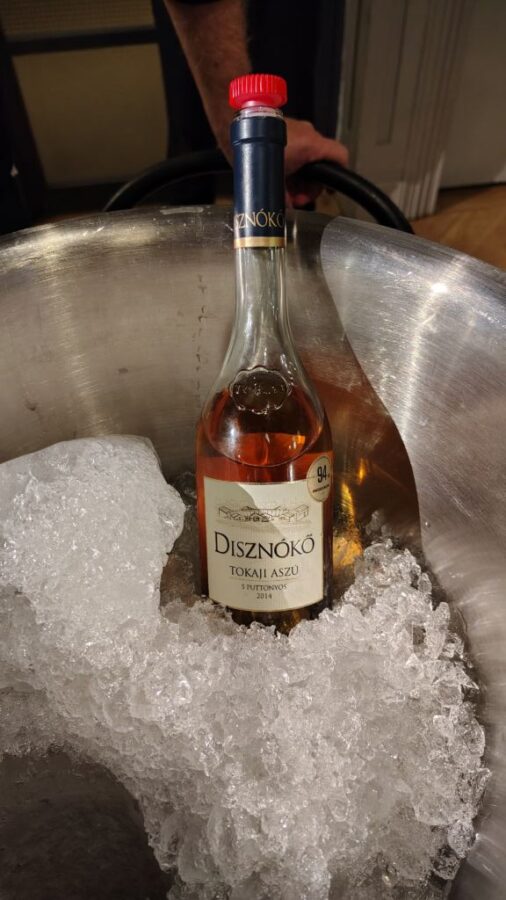
- Tokaj
- Soil-Predominantly volcanic
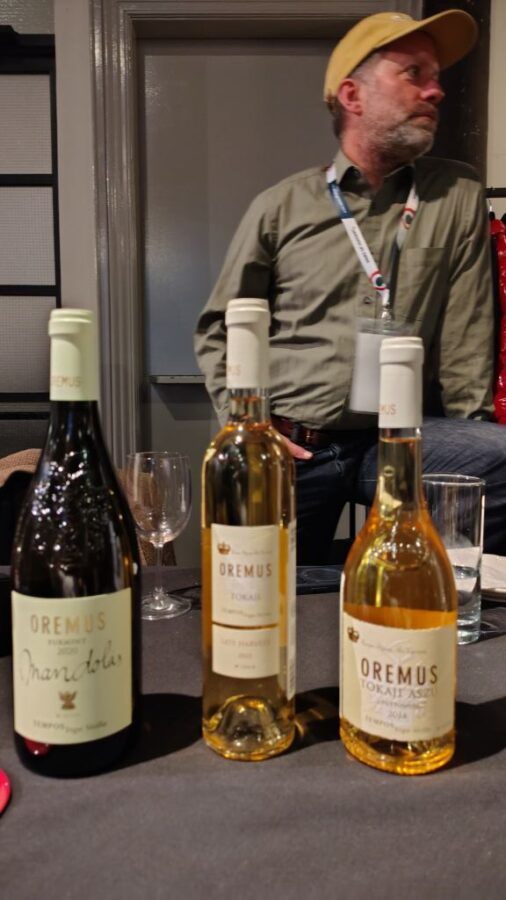
- Wine-Tokaji Aszú
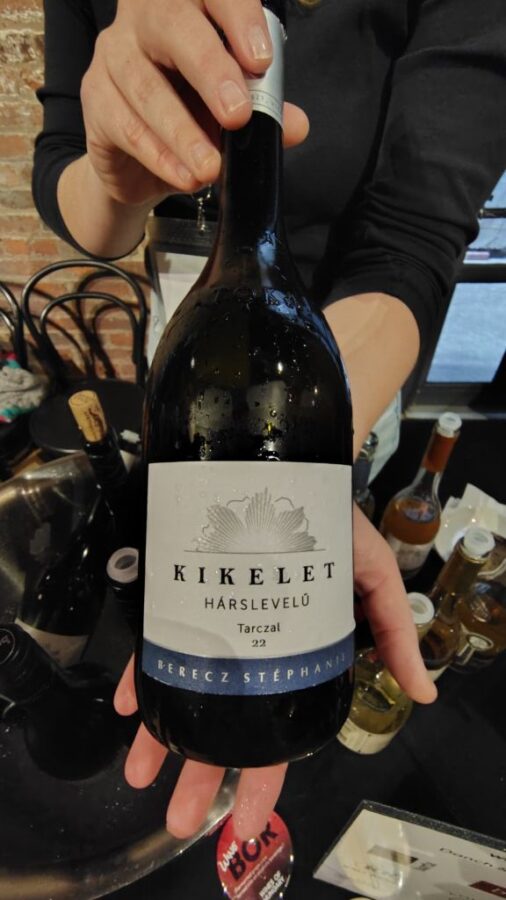
- Grape-Furmint, a native white varietal used for making fresh and fruit-dominant white wines and elegant, honey-sweet botrytised wines, and Hárslevelű, Kabar, Kövérszölö, Zéta, and Sárgamuskotály (Muscat)
- Fact-Tokaji Aszú is considered the world’s first botryrised wine
Notable wineries from Tokaj include:
- Oremus
- Kvaszinger
- Disznoko
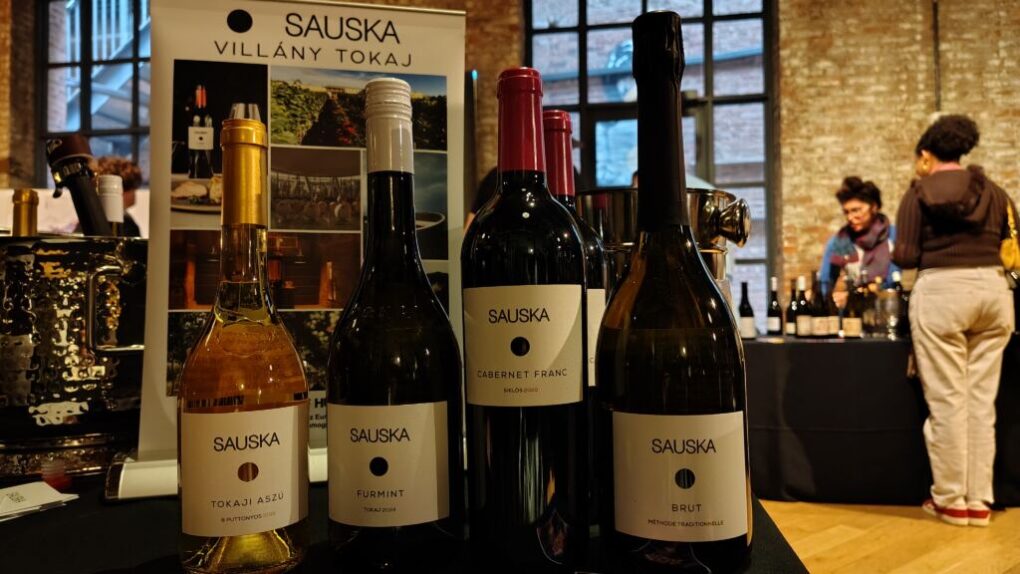
- Sauska (white wines)
- Kikelet
- Villány
- Soil-Predominantly mineral-rich
- Wine-Bordeaux-style red blends using Cabernet Franc, Cabernet Sauvignon, and Merlot, and Portugieser, Kékfrankos (Blaufränkisch), Kadarka, Schiller, Chardonnay, and Hárslevelű
- Grape-Cabernet Franc, Cabernet Sauvignon, Merlot, Portugieser, Kékfrankos, Kadarka, Schiller, Chardonnay, Welschriesling, and Hárslevelű
- Fact-Villány is Hungary’s unofficial red wine capital
Sauska winery has vineyards in Villány dedicated to the production of red wine
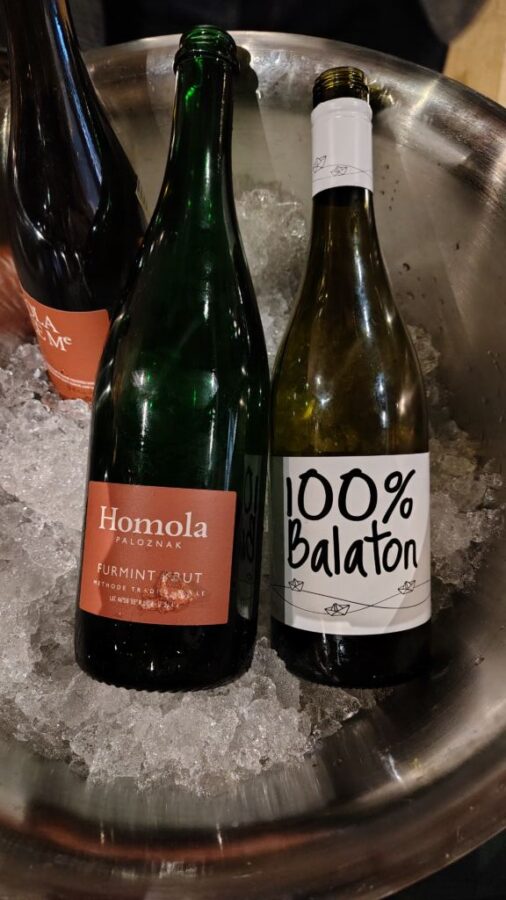
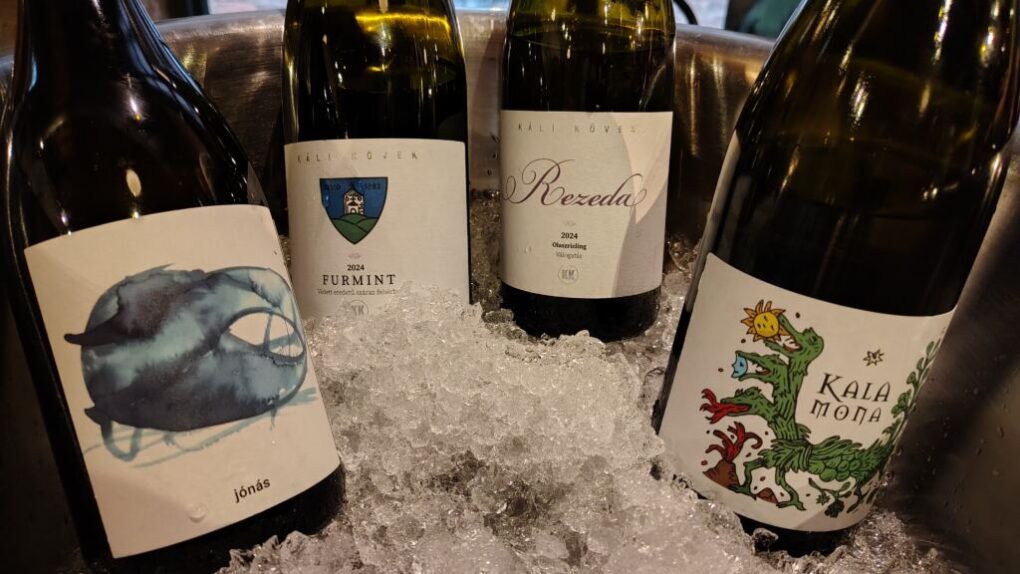
- Lake Balaton in West Hungary
- Soil-Ranging from marine and volcanic, to mineral and clay-dominant
- Wine-Olaszrizling, Irsai Olivér, Juhfark, Szürkebarát (Pinot Gris), Chardonnay, Kéknyelű, Merlot, Kékfrankos, Cabernet Sauvignon, and Pinot Noir
- Grape-Irsai Olivér, Olaszrizling, Szürkebarát, Juhfark, Királyleányka, Rajnai Rizling (Riesling), Sauvignon Blanc, Chardonnay, Zöldveltelini (Grüner Veltliner), Kadarka, Kékfrankos (Blaufränkisch), Pinot Noir, Merlot, and Cabernet Sauvignon
- Fact– This wine territory has six PDO-specific subregions
Notable wineries from the region include:
- Eger
- Soil-Limestone and volcanic
- Wine-Known for aromatic whites including Egri Csillag (Star of Eger), Leányka, Olaszrizling, and Furmint, and fresh and bright reds like Egri Bikavér (Bulls Blood), Kékfrankos, Kadarka, and Pinot Noir
- Grape-Olaszrizling, Leányka, Királyleányka, Hárslevelű, Sauvignon Blanc, Chardonnay Kékfrankos, Kadarka, Merlot, Pinot Noir, and Cabernet Sauvignon
- Fact-The volcanic soil around the Bükk Mountains gives wines in this region their distinctive mineral-rich quality
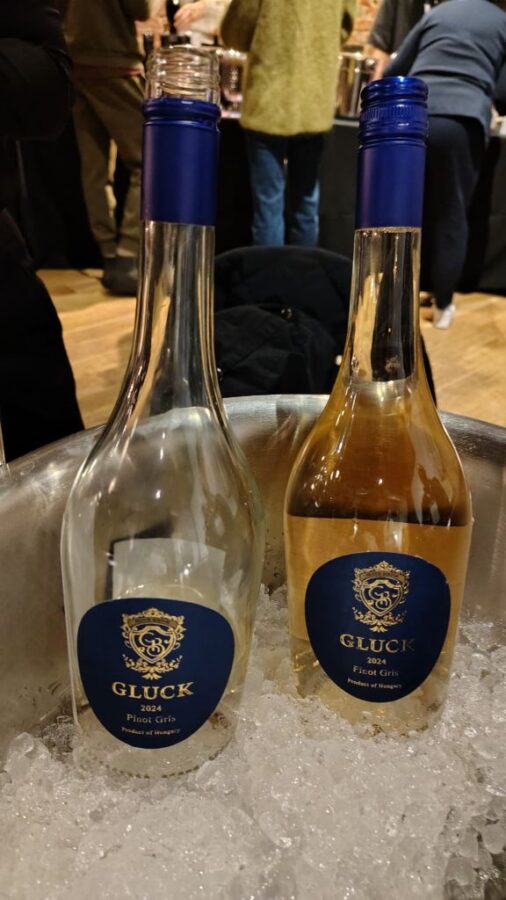
- Etyek-Buda
- Soil-Limestone and calcareous
- Wine-Crisp and mineral-driven Olaszrizling, Zöldveltelini, Sauvignon Blanc, Chardonnay, and Rajnai Rizling
- Grape-Olaszrizling, Zöldveltelini, Sauvignon Blanc, Chardonnay, Rajnai Rizling, and Pinot Noir
- Fact– This sparkling wine-producing region is less than 30 miles from Budapest
A notable winery from this region includes:
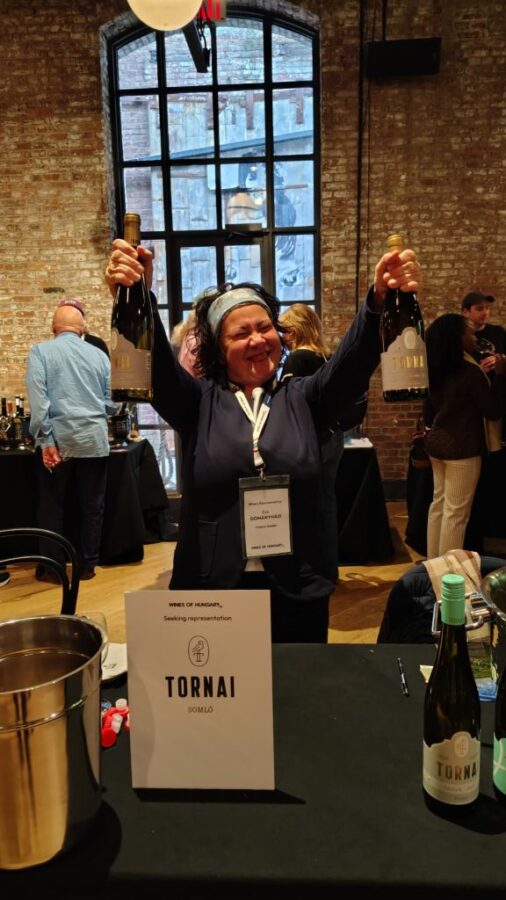
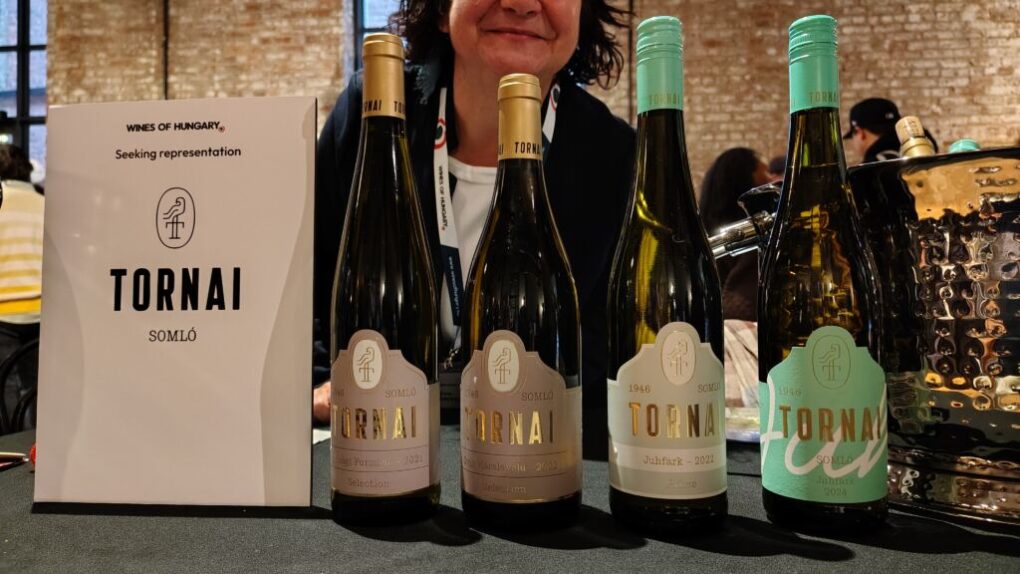
- Somló
- Soil– Predominantly basalt, calcium, sand, and pebble-rich volcanic
- Wine-Mineral-driven whites including Juhfark, Olaszrizling, Hárslevelű, Szürkebarát, and Tramini (Traminer)
- Grape-Furmint, Olaszrizling, Juhfark, and Hárslevelű
- Fact-This wine region is situated on an extinct volcano
A notable winery from this region includes:
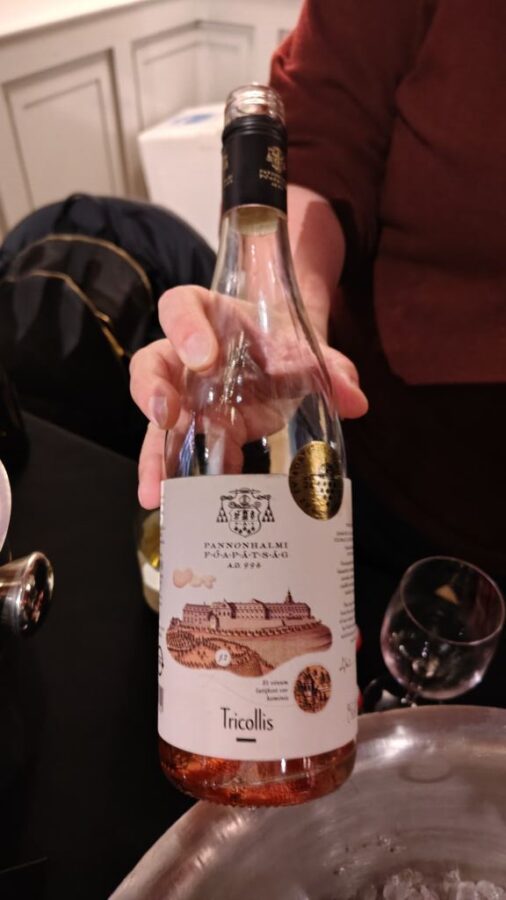
I was also delighted to have had the opportunity to try a wonderful white wine from the historic Pannonhalmi Apátsági Pincészet, located in a millennium-old Benedictine monastery.

Be First to Comment